Note: This page provides an introductory overview of the complex world of biblical textual criticism. The content below is explicitly intended as a concise summary of the most prominent issues and schools of thought. Given the immense depth of this field, which involves a rich array of scholarly nuances and technical arguments, this overview does not claim to be an exhaustive reference for every individual academic debate. The goal is to clarify the essence of historical disputes without the ambition of offering a comprehensive scientific platform.
WhatisTextual Criticism?
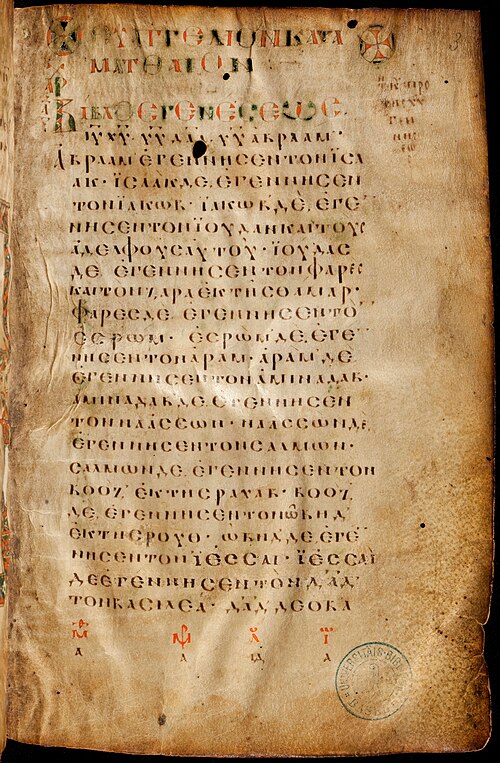
Textual criticism is the scientific discipline that attempts to reconstruct the original text of a writing when the original (the autograph) has been lost. In the case of the New Testament, we have thousands of handwritten manuscripts. Because these were copied by humans, small variations arose over the centuries. Textual criticism helps us to understand and evaluate these variations.
TwoMain Streams
In biblical textual criticism, we see roughly two approaches. On one side stands the Byzantine textual tradition (the basis of the Textus Receptus), characterized by a high degree of agreement among the vast majority of manuscripts. On the other side stands the Alexandrian text, based on a small number of very old manuscripts (such as Codex Sinaiticus and Vaticanus), which often differ from the majority.
"The defense of the Textus Receptus rests on the conviction that God preserved His Word in the church throughout the ages, rather than it being 'rediscovered' in a library or monastery in the 19th century."
MajorDisputes
Differences lead to intense debates over specific passages. Below are the most famous disputes:
1. The Comma Johanneum (1 John 5:7-8)
The Textus Receptus includes an explicit reference to the Trinity. Modern textual criticism omits this as it is absent from almost all ancient Greek manuscripts.
2. The Adulterous Woman (John 7:53-8:11)
The story of Jesus and the woman caught in adultery is missing from the oldest Alexandrian codices but is a standard part of the Textus Receptus tradition.
3. The Ending of Mark (Mark 16:9-20)
The last twelve verses of Mark are missing in Codex Sinaiticus. Modern translations often bracket them, while the TR accepts them as integral.
4. Erasmus' 'Back-translated' verses
Because Erasmus lacked a Greek manuscript for the final verses of Revelation, he translated them back from Latin into Greek. This resulted in several unique readings found in no Greek manuscript but preserved in the TR.
CurrentConsensus
Which text is considered "correct" today? It depends on the perspective:
The Scholarly Majority: Most scholars follow the Critical Text, favoring the oldest available manuscripts.
The Manuscript Majority: The Majority Text proponents argue that the numerical weight of thousands of manuscripts should outweigh a few older ones.
The Textus Receptus Position: Believers focus on the providential preservation of the text used by the Church for centuries.